Showing posts with label crunchy. Show all posts
Tuesday, February 28, 2012
Edible Sprouting Around the Kitchen
My tomatoes are sprouting!
ML stands for "Mortgage Lifter." I'm trying to grow some new varieties of tomato this year: Cherokee Purple, Black Krim, and Brandywine.
This sprouted lentil salad is quickly becoming my favorite. A few cups of sprouted lentils, green (or red) onion, feta (tomato basil feta is really good here), black olives, garlic powder, salt, pepper, olive oil and balsamic vinegar. Last week I put some green beans in it, too, but I can only imagine the possibilities this Summer with a garden full of fresh produce.
Today I had some on the side of minestrone soup with a hunk of buttered sourdough bread. I shouldn't eat this well during Lent!
Here is some sprouting wheat.
I'll probably grind some into sprouted flour.
But most of it is going to be made into tabbouleh!
I have to dehydrate it first.
And then stick it into the blender to make bulgur.
I've never made bulgur before, so this is an experiment.
If it doesn't go well, I've always got my sprouted lentil salad.
Thursday, September 15, 2011
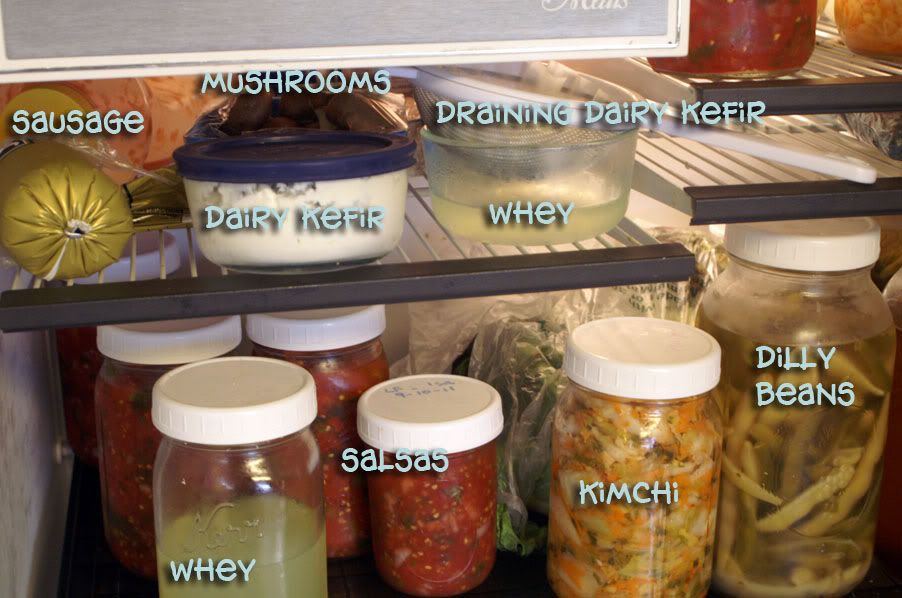
A Peek Inside My Lacto-Fermented Fridge
This post is going to be pretty long because I have writer's block. Trust me, it's much harder to write an articulate, short, pithy post than a long one when you've got writer's block.
I've been doing a lot of experimenting with lacto-fermentation these last two months. It all started with the dilly beans.
In case you've never heard of it, lacto-fermentation is an ancient method of food preservation that utilizes the beneficial bacteria already present on vegetables to preserve them while increasing the available vitamins and enzymes, enhances flavor, texture, digestibility of the vegetables, offers antibiotic and anticarcionogenic substances, all while helping support the growth of healthy flora in our intestines. It's beautiful, really. In the days before freezers and pressure canners, food was preserved in this way. The end result lasts several months in cool storage (a fridge or root cellar).
"Lacto" makes it sound like there's milk in it, and while you can aid the process of lacto-fermentation by adding whey (the liquidy stuff that floats on top of yogurt, even commercial yogurt), it's not necessary to do so. As I understand it, "lacto" in this case actually refers to a strain of beneficial bacteria called lactobaccili which produce lactic acid; the preserving compound.
Sourdough is a form of lacto-fermentation most people are familiar with, and sauerkraut (not the vinegar shelf-stable kind in the store, but the traditional kind made in crocks) is another, but there are so many other things you can lacto-ferment!
Anyway, my point here is not to deliver a discourse on lacto-fermentation but to remark how the interior of my fridge has changed!!
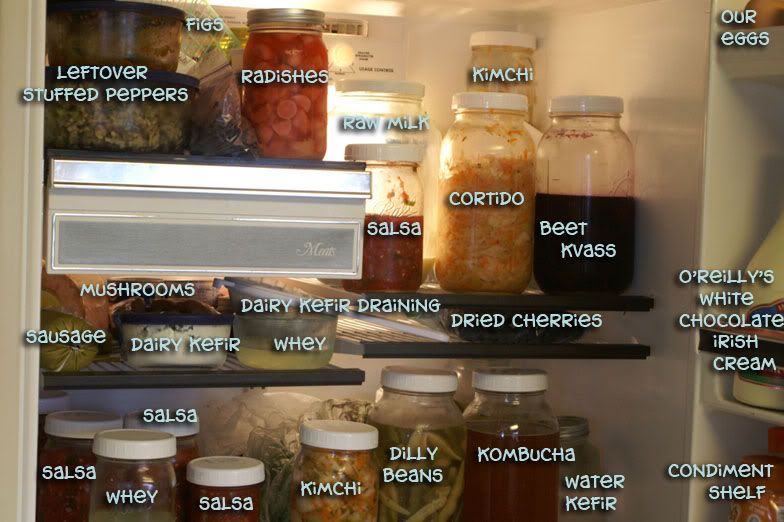
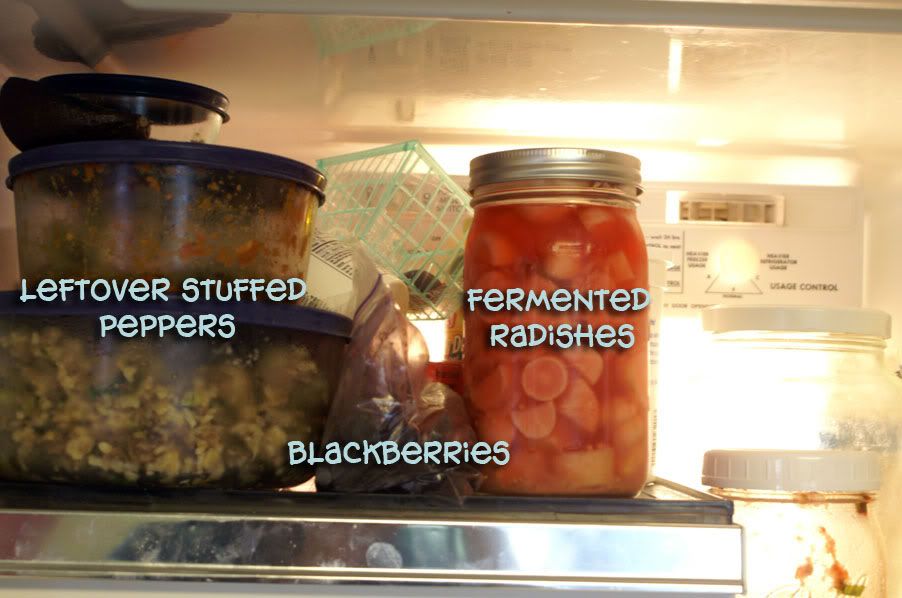
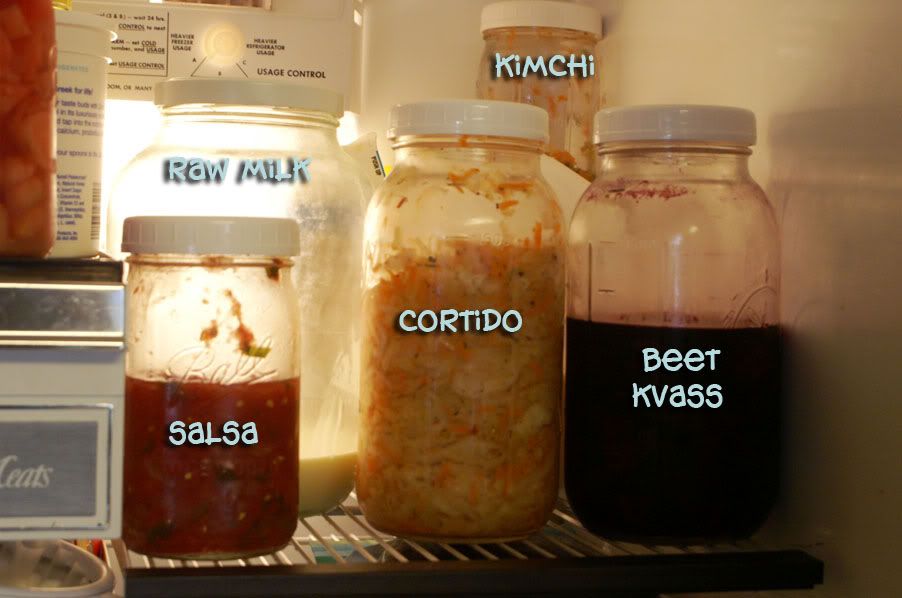
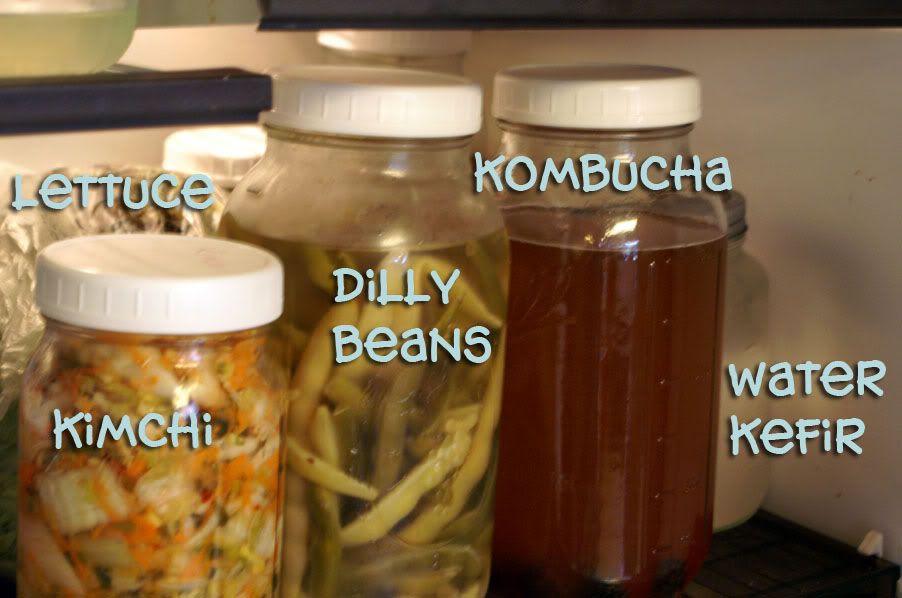
Among my lacto-ferments right now are dilled carrots (not pictured, 'cause I ate all of them right before I thought to take a picture), dilled green bean pickles, Kimchi (Korean sauerkraut), Cortido (Central American sauerkraut), beet kvass, pickled daikon radishes, Kombucha (a fermented tea), dairy kefir, water kefir, and salsa.
It's crazy!! Those cherries are from our farm and I have to make a conscious effort to stay out of them. I only dried a quart's worth and need to make 'em last a whole year. It's my incentive to make more next year.
The O'Reilly's White Chocolate Irish Cream is a Sunday coffee treat.
Stuffed peppers are my favorite meal on earth. It's what I make for my birthday every year and as often as I can outside of that. Besides ground beef and a little pork sausage, these (in an effort to sneak extra nutrition), also contain beef heart and liver. I couldn't taste the organs at all; they were really good.
I've been doing a lot of experimenting with lacto-fermentation these last two months. It all started with the dilly beans.
In case you've never heard of it, lacto-fermentation is an ancient method of food preservation that utilizes the beneficial bacteria already present on vegetables to preserve them while increasing the available vitamins and enzymes, enhances flavor, texture, digestibility of the vegetables, offers antibiotic and anticarcionogenic substances, all while helping support the growth of healthy flora in our intestines. It's beautiful, really. In the days before freezers and pressure canners, food was preserved in this way. The end result lasts several months in cool storage (a fridge or root cellar).
"Lacto" makes it sound like there's milk in it, and while you can aid the process of lacto-fermentation by adding whey (the liquidy stuff that floats on top of yogurt, even commercial yogurt), it's not necessary to do so. As I understand it, "lacto" in this case actually refers to a strain of beneficial bacteria called lactobaccili which produce lactic acid; the preserving compound.
Sourdough is a form of lacto-fermentation most people are familiar with, and sauerkraut (not the vinegar shelf-stable kind in the store, but the traditional kind made in crocks) is another, but there are so many other things you can lacto-ferment!
Anyway, my point here is not to deliver a discourse on lacto-fermentation but to remark how the interior of my fridge has changed!!
Among my lacto-ferments right now are dilled carrots (not pictured, 'cause I ate all of them right before I thought to take a picture), dilled green bean pickles, Kimchi (Korean sauerkraut), Cortido (Central American sauerkraut), beet kvass, pickled daikon radishes, Kombucha (a fermented tea), dairy kefir, water kefir, and salsa.
It's crazy!! Those cherries are from our farm and I have to make a conscious effort to stay out of them. I only dried a quart's worth and need to make 'em last a whole year. It's my incentive to make more next year.
The O'Reilly's White Chocolate Irish Cream is a Sunday coffee treat.
Stuffed peppers are my favorite meal on earth. It's what I make for my birthday every year and as often as I can outside of that. Besides ground beef and a little pork sausage, these (in an effort to sneak extra nutrition), also contain beef heart and liver. I couldn't taste the organs at all; they were really good.
Kimchi is fantastic with Chinese food, on rice, and (I know this sounds really gross but my palate is really changing) in canned tuna. Cortido is fantastic in tacos, burritos or fajitas. It's also perfect with pupusas, gorditas, tortas, good gravy my mouth is watering. The salsa (because it's fermented) is kinda tangy, so I prefer on something bland like scrambled eggs (though it's great anywhere cortido is, too, and of course on chips though I rarely eat those these days). Beet kvass is a tonic, not a sip-for-fun beverage, so I just drink a little in the morning and at night.
And I LOVE raw milk. Holy cow it's expensive around here, but until I get a "working" milk cow, my husband allows me some extra $$ in the grocery budget to buy it (in part 'cause he really loves it too, I think, hehe).
As I said, dilly beans were the first thing I lacto-fermented. I've since made three more 1/2 gallon batches 'cause I really like them. I'd love to say I eat them on the side of a liverwurst sourdough sandwich or something exotic like that, but honestly I just snack on them by themselves. They're sour, salty, crunchy, dilly... a unique and acquired taste, perhaps, but one I've certainly grown to like (and, er, crave?).
Kombucha I brew because a little bottle costs $3. I can make a gallon for around 50 cents (for the tea bags). Honestly I'm still working to like this one 'cause I always let it ferment a little too long so it's usually pretty tart. I made one batch perfectly and really liked it, but my husband loves it and would down the whole 1/2 gallon in a day if I didn't remind him it takes me a week to brew another batch.
Water kefir I've yet to score a real success with. I'm letting the grains hang out in my fridge (in sugar water) until I've got enough courage to try again. I tried every day for 3 weeks to make a successful batch but it never got fizzy and I just didn't care for it, much (and neither did my husband, though he liked it a lot when he lived in Europe).
We still eat Jimmy Dean sausage (MSG and all) until this Fall when my husband's cousin will butcher our first hog (well, we bought 1/2 of the hog, anyway).
I really like dairy kefir. I strain it (you can see it in a coffee filter inside a strainer over a bowl) until it's really thick and then use it like sour cream. It's especially good mixed into baked potato mashed potatoes (in place of sour cream). I keep saying I'm going to try kefir ice cream but I never have enough for a batch... someday soon I'll have to do that. I also want to try kefir bread.
The whey is used to make lacto-ferments, but there are at least a dozen other uses for it, too.
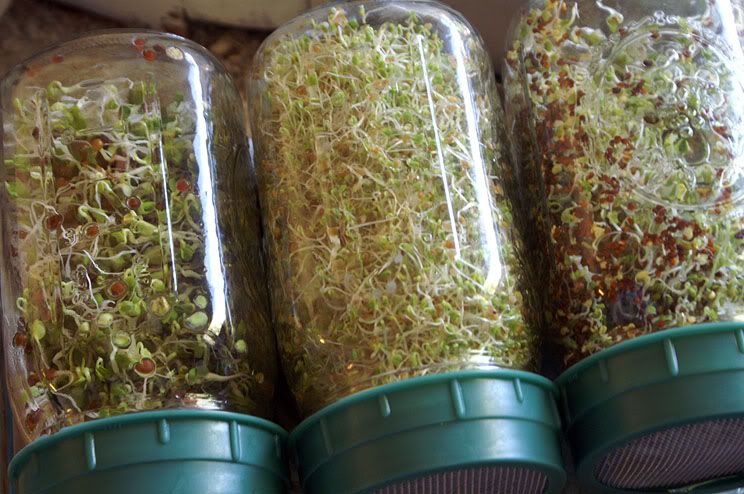
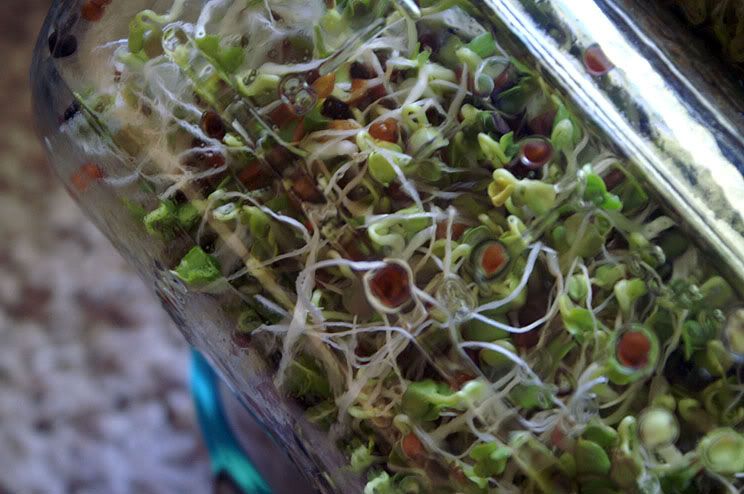
And these aren't lacto-ferments, but I've usually got radish, broccoli and clover sprouts going, too.
They make lovely salads, are so fresh tasting on sandwiches (or wraps or tacos), and surprisingly are a wonderful last-second topping/addition to soups, especially Asian soups.
So you can see we've been eating and drinking a lot of lacto-fermented things around here the last few months. I'm really quite new to it all but enjoy experimenting and look forward to many many more adventures in this area. Sourdough is my next project to tackle.
As to our health, it could all be the placebo effect of trying something new, but since trying to eat according to Nourishing Traditions
and the recommendations of the Weston A. Price Foundation (which includes these lacto-ferments), my skin is much clearer, I have more energy (no afternoon "give me a nap or shoot me now" slump), I don't have labored breathing, my digestion is... er... awesome, my mood has mostly stabilized (I was an emotional roller coaster for a while, there) and my crazy hormonal infertile body seems to be showing the first signs of marked improvement, too.
So there you have it. This is what happens when I've got severe writer's block.
Labels: crunchy, lacto-fermentation, wapf
Tweet
Friday, July 29, 2011
Kefir Disaster but Blukeberry Redemption
I'm really enjoying this whole dairy kefir gig.
I've been straining it and it tastes somewhere between sour cream and Greek yogurt: yum! I haven't strained it long enough to make cheese, but that will be next. I can't wait to try kefir ice cream.
I ran out of milk, though, and thought I'd try the grains in cream.
The only cream I have (and the only cream they sell around here) is ultra pasteurized. The kefir experts say "never use ultra pasteurized dairy," and I thought they were just being snobs.
Uuum... no, they're definitely not. The cream smells gross and it never thickened, either. Lesson learned!
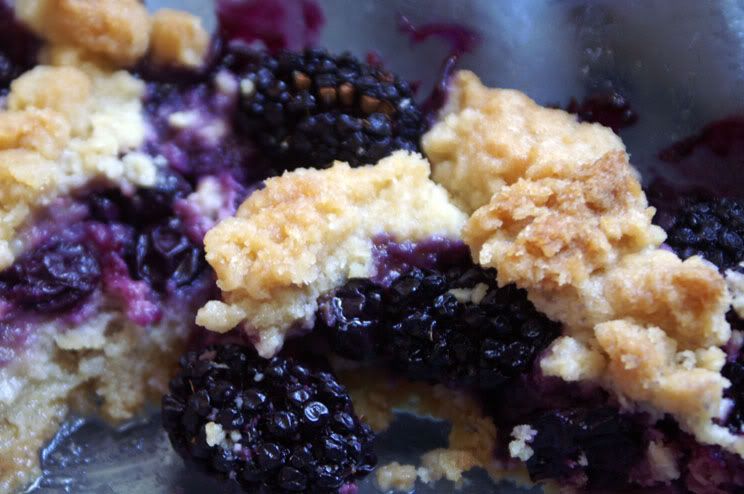
At least my blukeberry (blue/blackberry mix) bars turned out...
So all is not lost.
I've been straining it and it tastes somewhere between sour cream and Greek yogurt: yum! I haven't strained it long enough to make cheese, but that will be next. I can't wait to try kefir ice cream.
I ran out of milk, though, and thought I'd try the grains in cream.
The only cream I have (and the only cream they sell around here) is ultra pasteurized. The kefir experts say "never use ultra pasteurized dairy," and I thought they were just being snobs.
Uuum... no, they're definitely not. The cream smells gross and it never thickened, either. Lesson learned!
At least my blukeberry (blue/blackberry mix) bars turned out...
So all is not lost.
Labels: cooking failures, crunchy
Tweet
Tuesday, March 22, 2011
The No-Poo Experiment
My shampoo bottle is about to run out, and I'm contemplating whether or not to buy another one.
Several months ago, I quietly started experimenting with no-pooing... not using shampoo.
Before you recoil in horror, I wasn't walking around with slimy greasy icky stinky hair. I was washing it, just not with shampoo. I'm not a hippie!
To be kinder to your scalp, your skin, your plumbing, your reproductive system, and our water system, you can bypass parabens, Propylene glycol (PG), butylene glycol, isopropyl (SD-40), Sodium lauryl sulfate (SLS) and sodium laureth sulfate (SLES) and wash your hair with baking soda and diluted vinegar.
How well does it work?
Well, my hair was soft, shiny and it squeaked clean when I rinsed it. It did feel different (the strands were more separated -- more volume but not frizzy), but not unpleasantly different. I didn't go through the "greasy stage" that a lot of other people do who try it. I'd say it works perfectly well.
How to no-poo:
I mixed about a tablespoon of baking soda into a half cup of warm water, dumped it on my head, and massaged it in little circles into every spot on my scalp. Then rinsed.
As a "conditioning rinse," I mixed about a tablespoon of apple cider vinegar into cup of water, poured that on my head and rinsed.
There are more complete instructions and information here and here. Purportedly you're supposed to rinse with cold water, but no thanks.
Why I quit no-pooing, the cons:
1. There are no suds, because it's baking soda (made into a thin paste with water). I like suds; they make me think the shampoo is doing something. Mentally, it was hard to feel clean without a good lather.
2. Because it's anti-aromatherapy. When you're scrubbing away the oils, dirt, dead skin, and sweat in your hair, you don't smell tropical breezes, cucumber melon, lavender mist, apple blossom, cherry vanilla or tangerine blast... you smell oils, dirt, dead skin, and sweat. And that's followed with vinegar. Your hair doesn't smell bad after you're done, at all, it just doesn't smell sweet, and I like frilly smells. I've heard you can overcome this by adding a few drops of essential oils, but I never did it.
3. I never put it into a good container, so it was messy. This isn't a flaw of the system, it was my own laziness for not putting the stuff into nice bottles. Often, then, I had vinegar running down my face or baking soda dripping down my eyes. Granted, it didn't sting like shampoo would, but it was just not pleasant.
With that said, I'm still considering going back to it.
Why go back to it? The pros of no-pooing:
1. It's cheap.
2. It works.
3. It actually kept my hair cleaner longer. With shampoo, I can make it about 22 hours before it starts getting a little slick. With no-pooing I could easily have gone a lot longer. How much longer? I don't know, because after 48 hours I would wash it again just because.
4. If you're at all into earthy crunchy stuff (it doesn't have to get political here, if something is not toxic to your body or the environment then...?) it's pretty obvious why.
I'm still eying a cheap bottle of Suave in the hair care aisle, and will probably end up keeping a bottle on hand for those days when I just need a good Coconut Mango Tropical Tahitian Breeze sudsy lather. But on the rest of the days, I might just hop back into no-pooing.
What are you thoughts? Have you ever no-pooed? Would you ever consider no-pooing? Why or why not?
Several months ago, I quietly started experimenting with no-pooing... not using shampoo.
Before you recoil in horror, I wasn't walking around with slimy greasy icky stinky hair. I was washing it, just not with shampoo. I'm not a hippie!
To be kinder to your scalp, your skin, your plumbing, your reproductive system, and our water system, you can bypass parabens, Propylene glycol (PG), butylene glycol, isopropyl (SD-40), Sodium lauryl sulfate (SLS) and sodium laureth sulfate (SLES) and wash your hair with baking soda and diluted vinegar.
How well does it work?
Well, my hair was soft, shiny and it squeaked clean when I rinsed it. It did feel different (the strands were more separated -- more volume but not frizzy), but not unpleasantly different. I didn't go through the "greasy stage" that a lot of other people do who try it. I'd say it works perfectly well.
How to no-poo:
I mixed about a tablespoon of baking soda into a half cup of warm water, dumped it on my head, and massaged it in little circles into every spot on my scalp. Then rinsed.
As a "conditioning rinse," I mixed about a tablespoon of apple cider vinegar into cup of water, poured that on my head and rinsed.
There are more complete instructions and information here and here. Purportedly you're supposed to rinse with cold water, but no thanks.
Why I quit no-pooing, the cons:
1. There are no suds, because it's baking soda (made into a thin paste with water). I like suds; they make me think the shampoo is doing something. Mentally, it was hard to feel clean without a good lather.
2. Because it's anti-aromatherapy. When you're scrubbing away the oils, dirt, dead skin, and sweat in your hair, you don't smell tropical breezes, cucumber melon, lavender mist, apple blossom, cherry vanilla or tangerine blast... you smell oils, dirt, dead skin, and sweat. And that's followed with vinegar. Your hair doesn't smell bad after you're done, at all, it just doesn't smell sweet, and I like frilly smells. I've heard you can overcome this by adding a few drops of essential oils, but I never did it.
3. I never put it into a good container, so it was messy. This isn't a flaw of the system, it was my own laziness for not putting the stuff into nice bottles. Often, then, I had vinegar running down my face or baking soda dripping down my eyes. Granted, it didn't sting like shampoo would, but it was just not pleasant.
With that said, I'm still considering going back to it.
Why go back to it? The pros of no-pooing:
1. It's cheap.
2. It works.
3. It actually kept my hair cleaner longer. With shampoo, I can make it about 22 hours before it starts getting a little slick. With no-pooing I could easily have gone a lot longer. How much longer? I don't know, because after 48 hours I would wash it again just because.
4. If you're at all into earthy crunchy stuff (it doesn't have to get political here, if something is not toxic to your body or the environment then...?) it's pretty obvious why.
I'm still eying a cheap bottle of Suave in the hair care aisle, and will probably end up keeping a bottle on hand for those days when I just need a good Coconut Mango Tropical Tahitian Breeze sudsy lather. But on the rest of the days, I might just hop back into no-pooing.
What are you thoughts? Have you ever no-pooed? Would you ever consider no-pooing? Why or why not?
Subscribe to:
Posts (Atom)